Life in the Universe
Guest Speaker
Thursday, 12th February 2026 (19:45 - 22:00)
Venue: Hybrid
As it stands today, life on Earth is the only example we know. I will outline the history of life on Earth and comment on whether or not it's reasonable to expect from what we know of Earthly life that similar simple (single-celled) or complex (multi-cellular) life is likely exist elsewhere. Until recently the existence or absence of extraterrestrial life was a matter of speculation, but seeking evidence of it is now one of the most active and obsessive pursuits in contemporary astronomy. Within a few decades we will have explored potential sites for past or present life in the solar system and characterised Earth-like planets around other stars in the solar neighborhood, and we will be able to assess whether or not simple microbial life is common or unusual in the galaxy. Searches are also underway for signals broadcast by possible advanced civilisations elsewhere in our galaxy. I will summarise the motivations, the techniques used, and the prospects for the Search for Extraterrestrial Intelligence (SETI).
The future discovery of life, especially intelligent life, elsewhere in the Universe is often presented as something that would have profound cultural implications and that it would change utterly our conception of the Universe and our place in it. I will also comment on whether or not such predictions are justified.
Join online if you can't meet us at the meeting room HERE
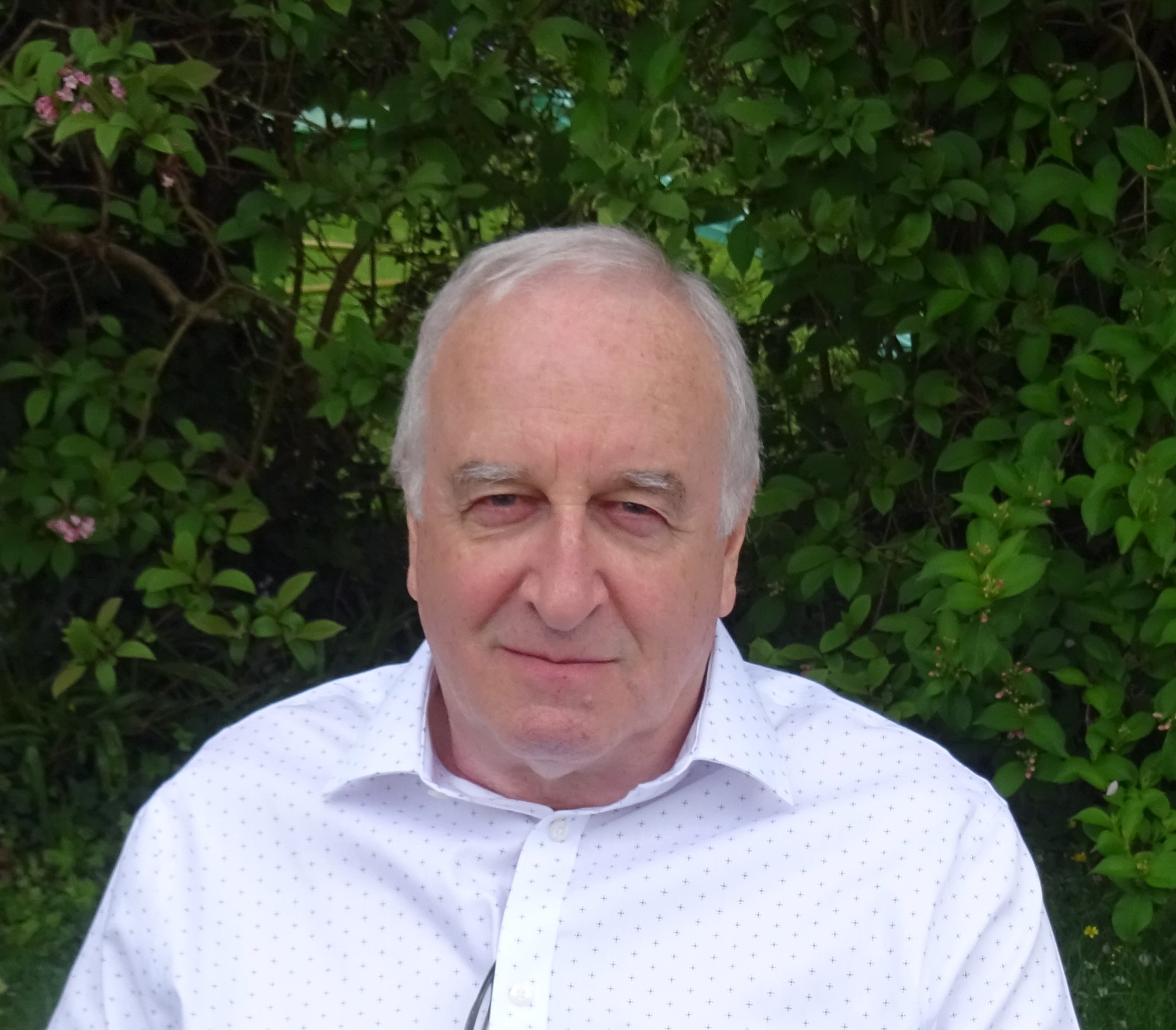
Speaker: Prof. Matt Griffin
Professor Matt Griffin is a member of the Cardiff Hub for Astrophysics Research and Technology (CHART). He studied Electrical Engineering at University College Dublin and Astrophysics at Queen Mary College London, receiving his PhD in 1985. His research work has included the development of many instruments for both ground-based and space-borne observatories, and their use in the study of planetary atmospheres, star formation, and galaxy evolution. He was the Principal Investigator for the SPIRE instrument on board ESA's Herschel Space Observatory. Currently he is UK Co-PI in the international consortium building the scientific payload for ESA’s Ariel mission to characterise the atmospheres of exoplanets, and a member of the team developing the PRobe Infrared Mission for Astrophysics (PRIMA) as a future NASA far infrared space observatory.